The 3 Scariest International Tracking Messages—and What They Usually Mean
Table of Contents
International Tracking Messages can look brutal when you’re waiting on a cross-border package. One short line can trigger panic, refund requests, or angry WISMO tickets. The good news: most “scary” scans have common causes, predictable timelines, and clear next steps. This guide breaks down the 3 messages that scare buyers the most, what they usually mean in real logistics operations, and what to do next.
1) “Held by Customs” / “Customs Clearance Delay”
This is the most anxiety-inducing of all International Tracking Messages because it sounds like the package is “stuck forever.” In reality, customs holds happen every day and many clear without any action.
What it usually means
In most lanes, customs holds happen for routine reasons:
- Random inspection or x-ray
- Invoice/value review
- Product category check (battery, liquid, cosmetics, branded goods, food)
- Paperwork mismatch (vague description, missing HS code, inconsistent value)
- Scan timing issue inside a bonded area (the parcel is moving, but the next scan hasn’t posted)
A hold is often “review in progress,” not “seized.”
What to do next
- Check if the tracking shows a request like “Documentation required” or “Awaiting duties/taxes.”
- If there is a request, collect: invoice/receipt, clear item description, receiver phone/email.
- If there is no request, set expectation: many holds clear in 1–5 business days.
- If it passes a normal window for your lane, open a carrier inquiry with the shipment details.
How to prevent it next time
You can reduce customs holds by tightening the data:
- Recipient phone/email on the label for countries that require contact
- Clean product description (specific words, avoid “gift” and “accessory” only)
- Consistent declared value (avoid random undervaluation that triggers review)
- Correct HS code (even a better category guess helps)
2) “Delivery Attempted” (But the Buyer Says Nobody Came)
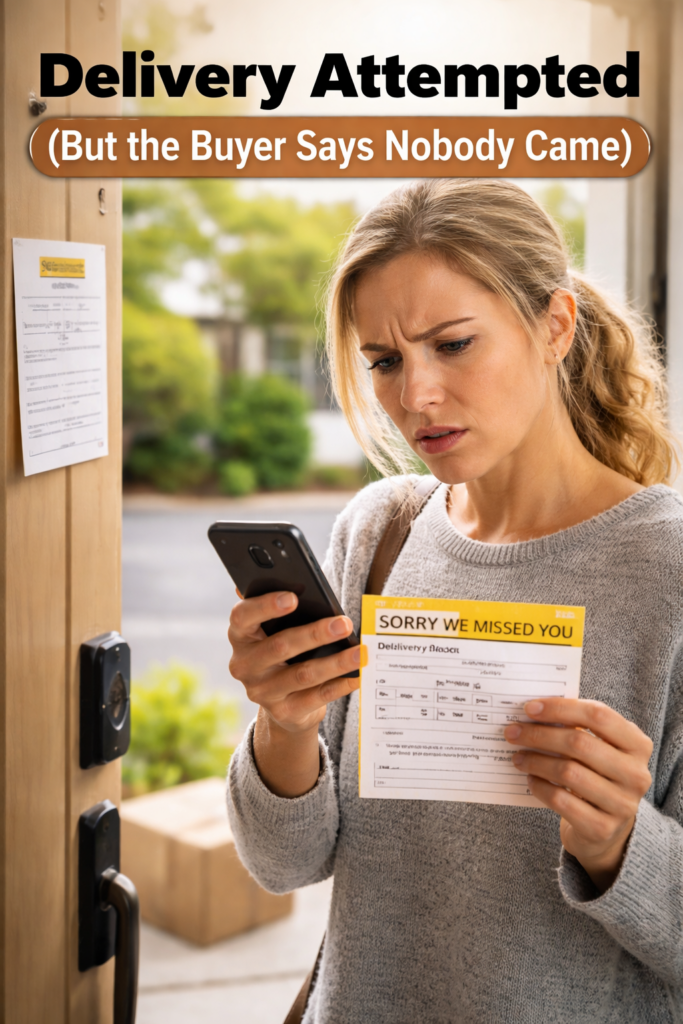
This is one of the most explosive International Tracking Messages because it instantly creates distrust. Customers assume the courier lied. Carriers often assume the address was bad. The truth is usually operational.
What it usually means
Common causes include:
- Apartment building access issues (gate code, intercom, locked lobby)
- No safe place to leave it, and signature is required
- Missing unit number or incomplete address line
- Local carrier rules differ from the upstream carrier
- Driver arrived earlier than expected and couldn’t wait
So “attempted” often means the stop couldn’t be completed, not that the parcel disappeared.
What to do next
Give a two-path plan so the customer feels in control:
- Self-check: mailroom, concierge, parcel locker, neighbor, front desk
- Confirm details: unit number, phone number, correct postal code
- Contact the local last-mile carrier if possible (they control reattempts)
- Switch strategy: request Hold for Pickup or schedule redelivery
How to reduce repeats
Most repeat attempts fail for the same reason. Fix the address format and add a reachable phone. If the building is hard to access, “hold at pickup point” is often the fastest win.
3) “No Tracking Updates” / “Label Created” / “Information Received”
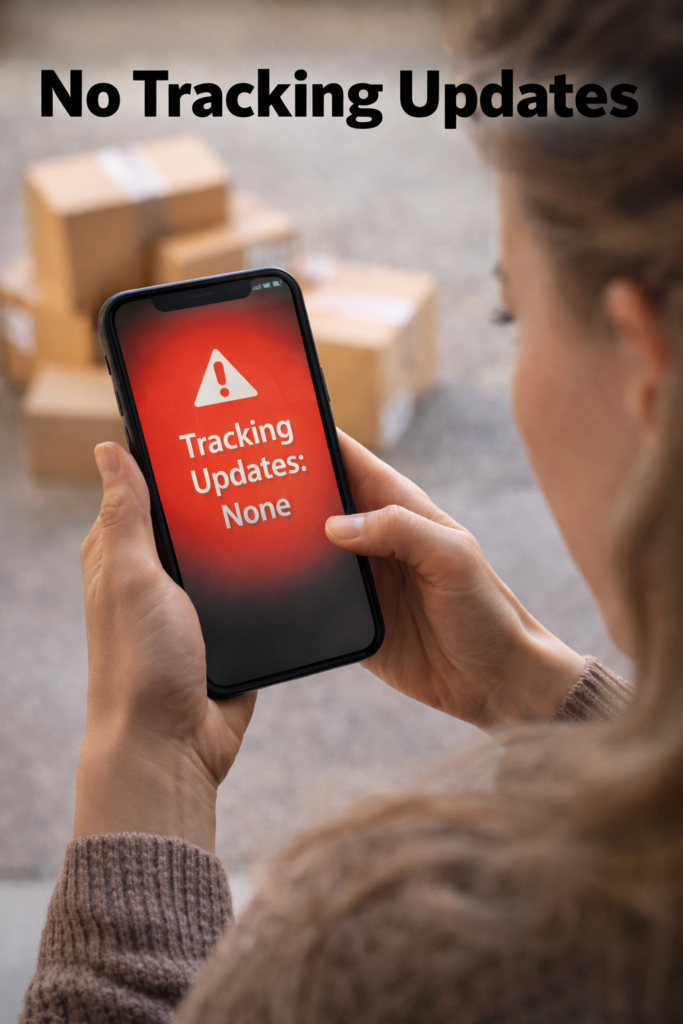
This is the most misunderstood category of International Tracking Messages. It feels like the parcel “doesn’t exist.” In many cases, it exists—but the first physical scan hasn’t posted.
What it usually means
Typically one of these is happening:
- Label was created, but the parcel hasn’t been handed to the carrier (batch pickup)
- The carrier received it, but the acceptance scan didn’t post
- The parcel is moving in a container, and item-level scans appear later
- Partner data sync is slow (postal and hybrid lanes often show gaps)
- Tracking ID mismatch or relabel during last-mile injection
So “no updates” is a category, not one single failure.
What to do next (use a simple timeline rule)
- 0–2 days: normal for batching and scan delay
- 3–5 days: verify warehouse dispatch proof (manifest/pickup) and carrier type
- 6–10 days: treat as a scan-gap exception; start a trace or proactive resolution
- 10+ days: escalate as overdue; prepare reship/refund path based on policy
How Postalparcel should message it
Instead of “no information,” use clear wording:
- “A label was created. The first physical scan hasn’t posted yet. Updates often appear at carrier acceptance or export processing.”
That one sentence can cut WISMO tickets fast.
A Quick Triage Map for International Tracking Messages
Customs-owned
Examples: “Held by customs,” “Clearance delay,” “Awaiting duties/taxes”
Best move: look for requests, collect documents, confirm receiver contact.
Last-mile-owned
Examples: “Delivery attempted,” “Unable to deliver,” “Address issue”
Best move: verify unit/phone/postal code, request reattempt or hold for pickup.
Data-gap-owned
Examples: “Label created,” “No updates”
Best move: confirm dispatch proof, apply timeline thresholds, trace if overdue.
Common Myths That Make These Messages Feel Scarier
Myth 1: “Held by customs means seized”
Usually false. A hold is a review state, not a final decision.
Myth 2: “Delivery attempted means the driver didn’t come”
Sometimes the driver didn’t reach the door, but “attempted” often means access failed or safe-drop wasn’t allowed.
Myth 3: “No updates means it wasn’t shipped”
Sometimes true, often not. Many lanes delay first scans until export or import.
FAQ About International Tracking Messages

What is the single most common scary message?
“Held by customs” is the most feared, but “no tracking updates” drives the most support volume because it starts earlier.
How do I know if customs needs action from me?
Look for companion messages like “documentation required” or “awaiting duties/taxes.” If you see those, action is usually required.
What should I do if “delivery attempted” happens twice?
Switch strategy: request hold for pickup or confirm the address format and phone number. Reattempts often fail for the same reason.
When should I escalate a “no updates” shipment?
If there is no scan after 6–10 days, treat it as an exception and start a trace, especially for lanes that normally scan earlier.
Can tracking be correct but still confusing?
Yes. Tracking reflects operational checkpoints, not human explanations. The scan can be accurate but still feel vague without context.
Conclusion
International Tracking Messages feel scary because they compress a complex process into one line. Most of the time, the fix is not guessing—it’s classifying the message: customs review, last-mile access, or scan latency. If you respond with a clear next step and a realistic time window, you reduce refunds, calm buyers, and keep cross-border delivery trust stable.

Industry Insights

news via inbox
Nulla turp dis cursus. Integer liberos euismod pretium faucibua