

International Tracking Visibility: How to Achieve End-to-End Milestone Coverage
International Tracking Visibility matters because customers do not just want “in transit.” They want a clear story: what happened, where it happened, and what should happen next. End-to-end milestone coverage turns scattered scans into a consistent timeline across first mile, linehaul, customs, and last mile—so operations teams act faster and support tickets drop.
International Tracking Visibility: What End-to-End Milestone Coverage Really Means

Milestone coverage is the percentage of shipments that receive the key tracking checkpoints you promise, across your major lanes and carriers. Good coverage is not “more events.” It is the right events, mapped consistently.
The milestones users actually understand
A practical cross-border milestone set looks like this:
- Order created
- Label created
- Packed / ready to ship
- Handed to origin partner
- Origin accepted (first scan)
- Export processed / dispatched
- Export customs submitted
- Export cleared
- Linehaul departed (flight/rail/truck)
- Linehaul arrived (gateway)
- Import customs submitted
- Import cleared / released
- Injected to last mile
- Out for delivery
- Delivered
- Exception (delay/return/held) when needed
This structure covers most real-world questions: “Did it leave China?” “Is it stuck in customs?” “Has the local courier received it?”
Why scan-only tracking creates gaps
Cross-border gaps happen because:
- Consolidation warehouses do not scan like parcel carriers do
- Airline movement is often container/manifest-level, not parcel-level
- Customs signals can be delayed, vague, or provided via brokers
- Last-mile carriers use different codes and update cycles
So a timeline can look “active” while still missing the steps that explain delays.
Build One Milestone Dictionary (Then Map Everything to It)

Milestone coverage fails when every carrier’s raw event codes are shown as-is. Postalparcel should treat milestones as a product standard.
Normalize every event into a canonical format
No matter the source, each event should be stored with:
- Event time (plus timezone handling)
- Location (country/city/airport code when possible)
- Source (carrier, warehouse, broker, linehaul partner)
- Raw code + raw description (for audit)
- Mapped milestone (your standard)
This lets you change mapping rules without losing the original truth.
Use context, not only code-to-code rules
Carrier codes are reused across networks. Add lane context so mapping stays stable:
- Origin vs destination country
- Whether export customs already happened
- Whether last-mile injection already happened
- Whether the shipment is tied to a manifest or transport unit
Context reduces wrong statuses like “delivered” appearing before “out for delivery.”
Use Layered Data Sources to Reach True End-to-End Visibility
A single tracking feed rarely provides full coverage. Combine layers so gaps close.

Carrier feeds (baseline)
Carrier APIs/webhooks are strong for:
- Acceptance, dispatch, out for delivery, delivered
They are weaker for:
- Airline movement
- Precise customs steps
Warehouse and consolidation events (first-mile clarity)
If you run consolidation or work with buying agents/forwarders, warehouse events fill the early timeline:
- Arrived at consolidation warehouse
- QC completed / photo inspection done
- Packed / consolidated
- Handed to linehaul
This reduces the most frustrating period: after payment but before the first carrier scan.
Linehaul signals (the biggest visibility upgrade)
Air/rail/truck linehaul often causes multi-day “silence.” You can still create reliable milestones by linking parcels to transport units:
- Manifest/bag/container IDs
- Dispatch and receiving logs at gateways
- Flight or linehaul schedule references
Even if the airline does not provide parcel scans, you can still produce “linehaul departed/arrived” milestones when the shipment is confirmed on a unit.
Customs status (exception control)
Customs is where tracking becomes operational control. Sources may include:
- Broker systems
- EDI status messages
- Manifest acceptance/release events
- Tax/duty payment confirmation for DDP
These signals allow clear, actionable messages like “Import submitted, pending review” instead of vague “in transit.”
Handle Missing Milestones Without Losing Trust

You will not get 100% scan coverage. The goal is to reduce gaps and explain them honestly.
Set “silence thresholds” per service level
Define when a shipment should be considered “quiet” based on lane/service:
- Express: 12–24 hours
- Standard cross-border: 24–72 hours
- Economy lines: 48–96 hours
When silence passes the threshold, trigger an internal exception workflow, not a generic customer message.
Use derived milestones carefully
Derived milestones are inferred from strong supporting data (like manifest arrival). They can improve coverage, but they must be controlled:
- Mark them internally as derived
- Keep raw evidence for support audits
- Use conservative wording in the customer UI
Example: “Arrived at destination gateway (confirmed on linehaul unit).”
De-duplicate and accept out-of-order events
Late events are normal. Your pipeline should:
- Deduplicate near-identical events
- Insert out-of-order events safely
- Recompute the milestone timeline without breaking the story
This avoids confusing customers with time-travel tracking.
Measure Milestone Coverage Like a KPI, Not a Feature
If you do not measure it, it will degrade as lanes and partners change.

Track coverage rate per milestone
Measure the percentage of shipments that hit each milestone with verified events:
- Origin acceptance coverage
- Export cleared coverage
- Linehaul departed/arrived coverage
- Import cleared coverage
- Last-mile injection coverage
- Out-for-delivery coverage
This tells you exactly where visibility breaks by lane or partner.
Track event latency (how late updates arrive)
A correct event that arrives 36 hours late still feels wrong to customers. Monitor:
- Average delay per data source
- Worst-case delays per lane
- Partner-specific latency spikes
Then prioritize integrations and SLAs where latency causes the most “WISMO” tickets.
Track exception precision
Alerts must be meaningful:
- False positives (noise)
- Missed exceptions (too late)
- Time-to-first-action
Better precision improves both customer trust and ops efficiency.
Ship a Timeline UI That Feels Predictable and Clear
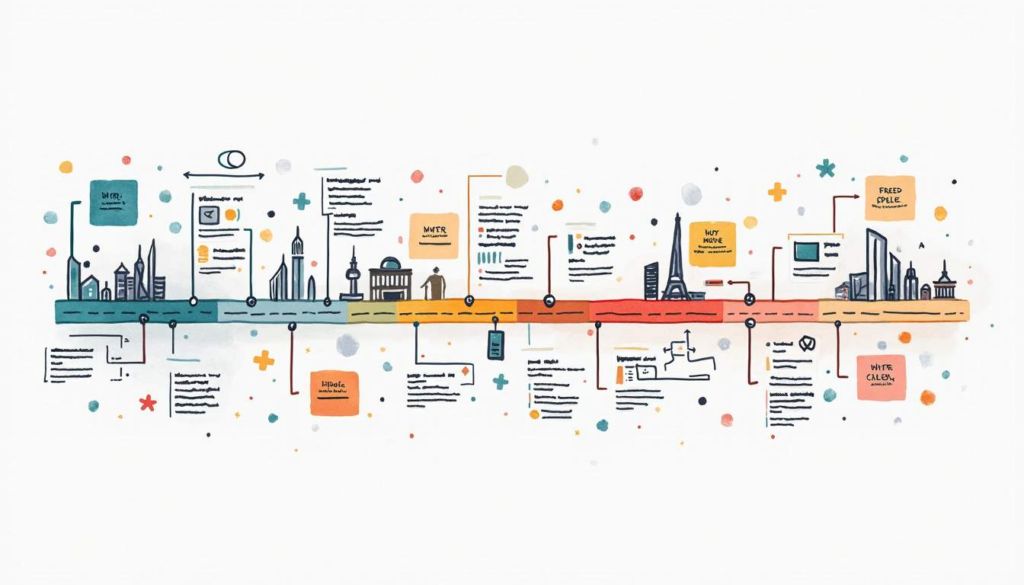
Great data can still fail if the UI is messy.
Use simple milestone labels
Replace raw carrier jargon with milestone names customers understand:
- Arrived at destination gateway
- Import clearance in progress
- Handed to local courier
Show what happens next
After the current milestone, add a short expectation:
- Next: Import clearance. Typical time: 1–3 days
- Next: Last-mile pickup. Typical time: 12–48 hours
This sets expectations and reduces support pressure.
Provide detail without overwhelming the page
Useful detail fields:
- City/airport code
- Local time
- Carrier name
- Reference number (optional)
Keep raw logs behind a “View details” toggle.
A Practical Rollout Plan for Postalparcel

Phase 1 — Standardize milestones + normalize carrier events
- Define your milestone dictionary
- Normalize event storage (time, location, raw payload)
- Map top lanes first
Phase 2 — Add warehouse/consolidation events
- Capture receive/QC/pack/handover
- Reduce pre-scan uncertainty
Phase 3 — Add linehaul + customs signals
- Link parcels to manifests/transport units
- Add customs submitted/released milestones
- Introduce derived milestones with audit trails
Phase 4 — Improve coverage with dashboards and partner action
- Build lane/carrier/milestone coverage dashboards
- Fix the biggest gaps first (usually gateways, customs, last-mile injection)
Conclusion
International Tracking Visibility improves when milestones are standardized, data sources are layered, and mapping is maintained like a living system. With clear milestones, strong linehaul and customs signals, and measurable coverage KPIs, end-to-end milestone coverage becomes achievable—and your tracking page becomes a trust builder instead of a complaint trigger.



Industry Insights

news via inbox
Nulla turp dis cursus. Integer liberos euismod pretium faucibua