
How to Build Cross-Border Logistics Visibility With Multi-Carrier Tracking
How to Build Cross-Border Logistics Visibility With Multi-Carrier Tracking comes down to one goal: turn scattered carrier scans into a single, reliable shipment story that your ops team and customers can trust. Cross-border parcels change hands many times—origin pickup, export hub, airline linehaul, import gateway, customs, and last mile. Each handoff adds data gaps. So visibility is not “more tracking links.” It is one timeline, clean identifiers, and rules that turn events into actions.
1) What “visibility” should deliver
Good visibility answers these questions in seconds:
- Where is the parcel right now, in an actionable location?
- What was the last confirmed scan, and what should happen next?
- Is it on time, delayed, or blocked?
- Who owns the next step—seller, forwarder, broker, or last-mile carrier?
- Can you prove delivery, attempted delivery, return receipt, or damage?
If you cannot answer these quickly, you have tracking data, not visibility.
2) Why cross-border tracking breaks so easily
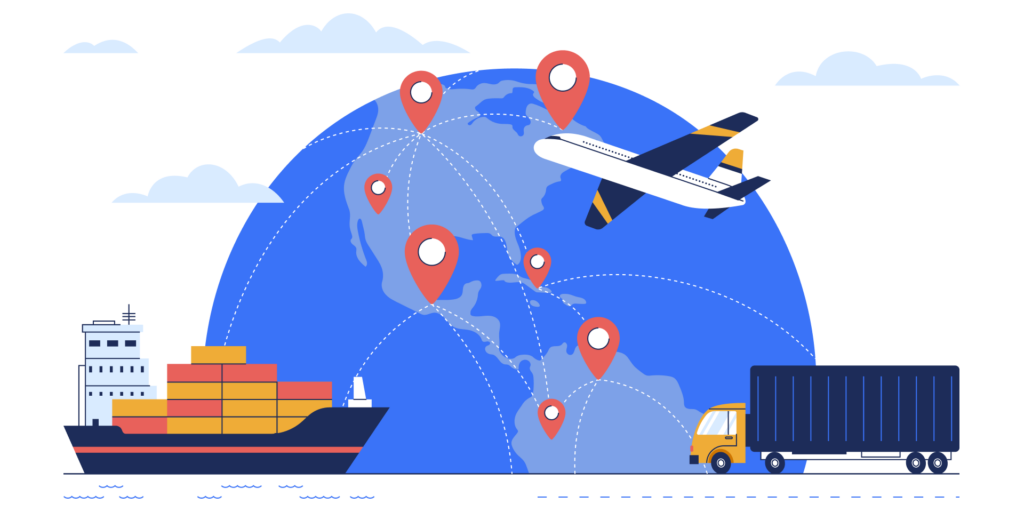
Many custody transfers
A typical route can include 6–10 touchpoints. Each party may stop updating once it hands off the parcel. That creates “silence” that looks like a delay, even when freight is moving normally.
Different status language
One carrier says “Departed Facility.” Another says “Despatched.” Another says “Linehaul.” These can mean the same step—or different steps—depending on the network.
Economy lanes show fewer scans
Consolidated and postal-hybrid routes often scan only at key milestones: acceptance, export handoff, import arrival, last-mile induction, delivery. Fewer scans do not always mean higher risk, but customers still worry.
Weak shipment data causes real delays
Bad addresses, missing unit numbers, unclear product descriptions, and incomplete customs data cause holds and failed deliveries. Tracking cannot rescue bad inputs.
3) Build one canonical timeline (the foundation)

The fastest way to improve visibility is to standardize every carrier feed into one shared milestone model.
Define your milestone stages
Use a simple set that fits most cross-border routes:
- Label created
- Accepted / first scan
- Origin processing
- Export cleared
- Linehaul departed
- Import arrival (USA)
- Customs in progress
- Customs cleared
- Tendered to last mile (USPS/UPS/FedEx)
- Out for delivery
- Delivered
- Exception (address issue, held, return, damage)
Then map every carrier event into one milestone. If an event is unclear, keep it as “informational” and do not let it override the main state.
Why this works
Ops teams and customers do not need 60 raw scans. They need:
- Current stage
- Last confirmed scan time and location
- Next expected milestone
- Risk flags and next actions
Postalparcel-style visibility is strongest when every shipment reads the same, even when carriers differ.
4) Standardize the data that tracking depends on

Visibility fails when identifiers and core fields are inconsistent.
Shipment identifiers you must link
- Customer-facing tracking number (the one you show)
- Carrier tracking numbers (can be multiple)
- Bag/container ID for consolidated linehaul (if used)
- Order ID and package ID
- Return label ID (for reverse logistics)
If you relabel or switch carriers mid-route, keep the relationship between old and new IDs. Otherwise, your timeline splits into two broken stories.
Address normalization
Make address quality a hard rule, not a suggestion:
- Validate city/state/ZIP alignment
- Require apartment/unit numbers when needed
- Store recipient phone/email for delivery contact
- Keep a clean “address version history” if edits occur
Address issues are among the most expensive exceptions because they appear late, after most shipping cost is already spent.
Customs and item fields
Clean customs inputs reduce holds and random-looking delays:
- Specific item description (avoid vague words)
- Declared value consistent with invoice
- Accurate weight and quantity
- HS code where your lanes require it
Better inputs create faster clearance and fewer “held by customs” tickets.
5) Integrate multi-carrier tracking without overbuilding

You do not need every carrier at once. Start with the lanes that drive volume and support tickets.
Pick carriers by volume and pain
Rank carriers by:
- Shipment volume
- Exception rate
- “Where is my package?” ticket share
- Dispute rate and refund leakage exposure
- Proof quality (signature/photo/scan depth)
Then integrate the top group first.
Capture events consistently
For each event, store:
- Timestamp with timezone
- Raw status code and text
- Location string and facility hints (if available)
- Source type (physical scan vs EDI message)
- Raw payload for audit
This creates accountability and lets you debug mapping issues later.
Separate EDI updates from physical scans
Many networks publish electronic updates that look like movement. They help planning, but they do not always prove custody.
A practical rule:
- Physical scans advance “where it is.”
- EDI updates support “what is planned.”
This reduces false ETAs and avoids confusing customers when reality diverges from the plan.
6) Turn Cross-Border Logistics visibility into decisions with rules and alerts
Visibility becomes valuable when it triggers the right action at the right time.
Stall detection rules that work well
Set alerts such as:
- No acceptance scan 72 hours after label creation
- No movement 10 days after export handoff (air lanes)
- Customs in progress longer than 5 business days
- Tendered to last mile but no induction scan within 3 days
- Out for delivery but not delivered by day end
- Delivered scan + “not received” claim (high risk)
Each alert should include:
- Owner of the next action
- Data needed (invoice, address correction, proof request)
- SLA and escalation steps
Classify exceptions by what they need
Group exceptions into:
- Fixable: address issue, pickup required, missing customs info
- Investigate: long stall, route looping, scan mismatch
- High risk: damage, return to sender, delivery dispute
This helps support teams respond faster and reduces avoidable refunds.
7) Prove outcomes: delivery, returns, and disputes

Cross-border visibility is also evidence management.
Delivery proof standards
Capture and retain:
- Delivery timestamp
- Delivery location text
- Signature name when available
- Photo proof when available
- “Delivered to agent/mailroom” indicators for apartments
This data improves dispute win rates and reduces “delivered but missing” losses.
Returns visibility matters just as much
Outbound tracking is common. Inbound returns tracking is often weak, and that drives refund leakage.
Link return events to the original order:
- Return label with trackable ID
- “Received at warehouse” scan
- Weight checkpoints for higher-risk items
- Photo checkpoints for content verification when needed
8) Customer-facing tracking that reduces tickets

A good tracking page lowers support load while staying honest.
What to show
- A clear stage timeline (milestones, not carrier jargon)
- Last confirmed scan with location
- Next expected milestone with a realistic range
- Plain-language exception explanations
- A “What you can do now” box (address fix, pickup steps)
What to avoid
- Overpromising ETAs based on EDI signals
- Dumping raw scan logs with no summary
- Using “In transit” with no context
When customers understand the steps, they tolerate normal gaps and stop guessing.
Conclusion
How to Build Cross-Border Logistics Visibility With Multi-Carrier Tracking is a practical build: define one canonical timeline, normalize identifiers and shipment data, integrate carriers by priority, and add rules that convert scan events into clear next actions. Once you pair that with strong proof capture and a customer-friendly tracking page, cross-border delivery feels predictable—even when networks are complex. Postalparcel can support this model by unifying multi-carrier events into consistent milestones and giving teams the controls they need to reduce tickets, disputes, and refund leakage.

Industry Insights

news via inbox
Nulla turp dis cursus. Integer liberos euismod pretium faucibua